Zafado

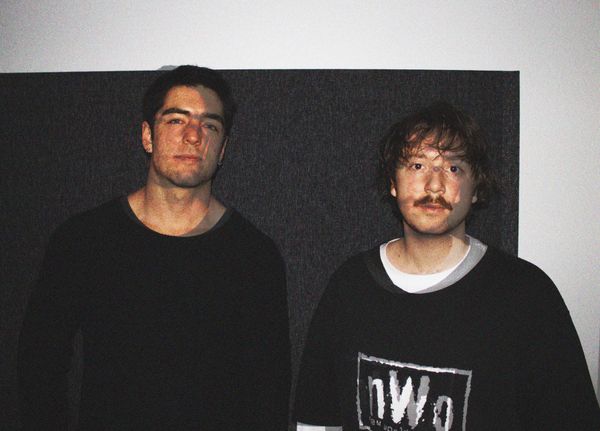
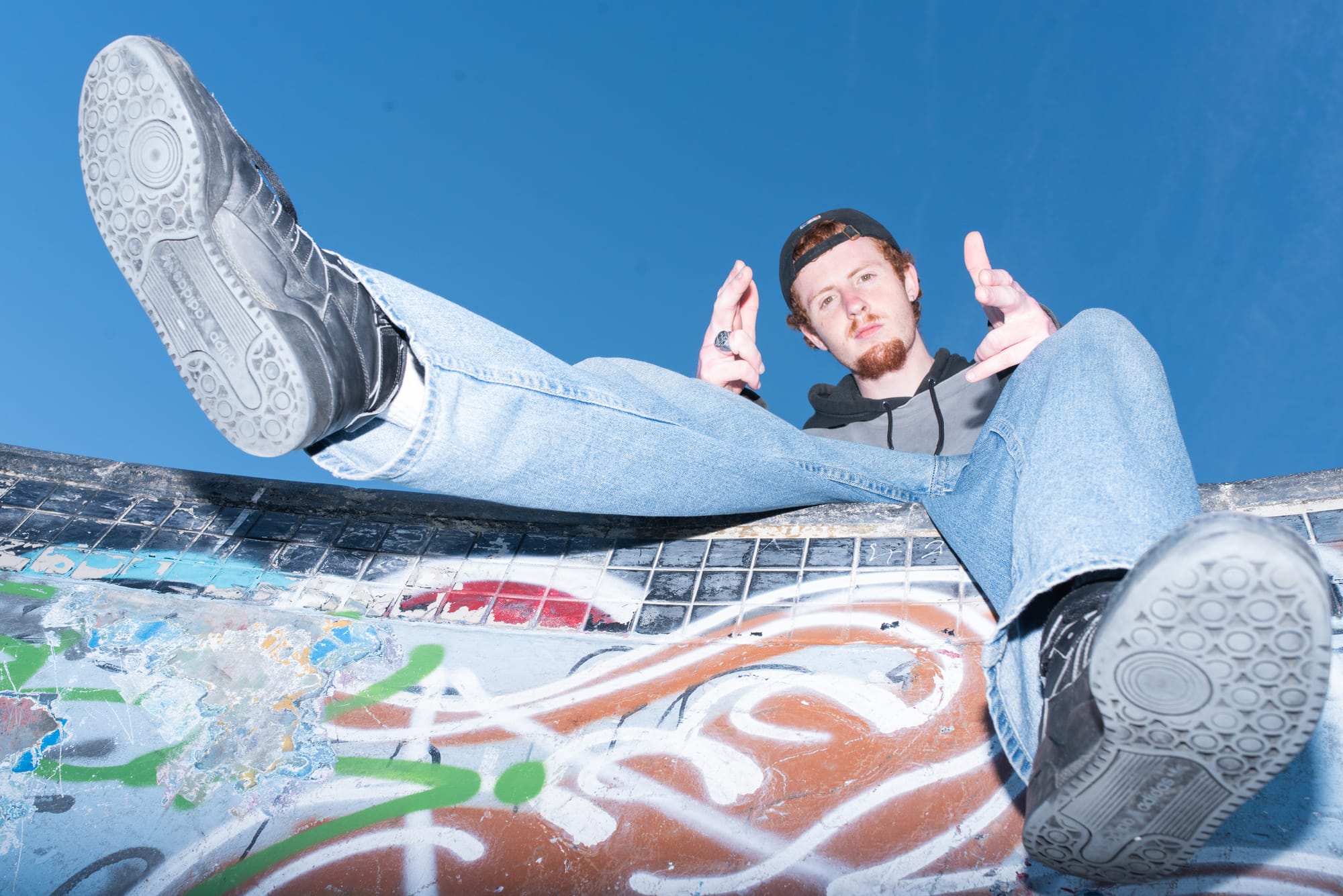
Pōneke alternative hip-hop outfit Zafado (pronounced “zah-fah-doh”) have spent the past year building a reputation as one of the capital's most exciting underground acts. The band brought together Auckland-born vocalist Adam McPhail, Nelson musicians Tyler Curtis (drums) and Duncan Petre (guitar), Far North bassist Soli Fox, and Wellington pianist Quentin Stark, combining influences from funk, reggae, jazz and hip-hop into a sound entirely their own. Their journey culminated in a headline show at Moon Bar in Newtown, where the band performed songs from their debut EP Extended Paranoia while raising funds for Palestinian relief efforts. Following the passing of McPhail in March 2026, the release has taken on an even deeper significance for the remaining members. Ahead of the EP's release, I sat down with Tyler, Duncan and Quentin to reflect on the band's beginnings, the creative vision behind the record, and the legacy of the friend whose voice and songwriting remain at the heart of Zafado's music.
How did the band first come together?
Tyler: A few of us, minus Duncan, were all studying music at Massey, and so basically we kind of all met through that. Soli was my neighbour in halls, so we became friends. And Soli and Adam became friends, and then we wanted to start doing music so I roped Duncan to come join, and Adam roped Quentin in too.
Duncan: We were having jams in my room and in Tyler's dorm. It probably wasn't too good for his flatmates and neighbours! But I think that's pretty much where we started; in Tyler's dorm.
Where did the name come from?
Tyler: So Zafado is Peruvian Spanish. Adam did a year-long exchange in Peru, and so Zafado basically means something like madman, mad, rambunctious, kind of like high energy.
Duncan: It was Adam's idea. We all thought it was sick, so we went with it.
It sounds pretty cool! So what are some of the artists or bands that have influenced your sound?
Duncan: I think we've listed Sublime. Some Rage Against the Machine previously, but it's also different for everyone.
Tyler: Yeah. So there's a lot of funk influences, jazz influences, rap influences. It's kinda hard to describe, but yeah. That's probably the big two.
Duncan: If Soli was here, he would say Steely Dan. Lots of Steely Dan.
So how would you describe your genre?
Duncan: Alternative hip hop.
Tyler: Hip hop funk!
Duncan: I think on our TikTok, Adam put it as “hip hop bop”, which really resonated with me. I just thought that was really fun. But yeah, like funky, funky hip hop. And it's all live instruments. We don't use samples. It's all us.
I was listening to President earlier and I got a lot of Tom Scott and Home Brew sort of vibes.
Duncan: Yeah. Other people have said that before. We do dig a bit of Home Brew.
If someone was listening to you for the first time, what song would you recommend that they start with?
Tyler: President.
Duncan: President or New Sound System. That's the one I usually send people to. Just both really, really funky tunes.
So what made Adam such a unique frontman and songwriter?
Duncan: I think he was just really charismatic.
Tyler: He was really perceptive as well. He had such a view on the world that I didn't have, but that resonated really strongly with me, and he had such a way of articulating it through a local lens as well. There is a lot of Kiwi and Peruvian influences that drove his metaphors.
Duncan: He had this very local, understandable take on everything.
Are there any particular memories from rehearsals or gigs that sort of capture who Adam was as a person?
Tyler: We had a gig we played at Moon Bar where at the start of the gig Duncan's guitar broke, and so we weren't able to do our original plan to open the set. So what we ended up doing instead was just having a jam session, and Adam spent a good 10 minutes just freestyling, and making fun of Duncan for his guitar not working.
Duncan: He was just getting everyone real hyped to be honest. It was really cool. He just instantly knew what to do as well.
Quentin: I just remember always being so amazed by his freestyling ability. I remember first working with him, through the Massey bands, and just being like, "Wow, this is, this is so different, and I've never met anyone who can do this before." And, when people would comment on that he would say, "It's not hard. You just gotta practice." Everyone was always so impressed.
Tyler: I remember we were doing these couch demos which we plugged our guitars into a Scarlet interface or something and we were trying to record bad versions of our songs. We did this one for President, and while we were recording the video for it, Adam picked up a road cone and started pretending, miming playing guitar on it while we were jamming and that was really fun.
What do you think Adam would've been most proud of when listening back to Extended Paranoia?
Tyler: I think he had this vision, because with Extended Paranoia, the idea was to focus on different sides of what paranoia can be and these different angles of it. And I think the way that concept comes across is really clear, and I think he would be really proud of how that concept comes across.
Duncan: Yeah, I think we definitely get that across even just on six tracks. I know he was a big fan of the songs. I'm sure he would have liked the way everything came together.
So you’ve said that the EP was recorded over several months and went through multiple versions. What was the process behind that?
Duncan: Everyone kind of brought something different to the EP. Like, Tyler was bringing in riffs. Adam would have his own verses, and then we would have to write a song underneath it. I think it was Ascending, the last track on the EP, that definitely went through the most amount of changes. He had already had a demo with this song, which was a real just, straight up hip hop, four on the floor melody.
Quentin: And then Soli wrote the bass riff,
Duncan: Yeah. And it just completely changed the song.
Tyler: I think it has such a cool vibe.
Duncan: It's just so cool. Everyone brought their own side of their musicality to the EP, which was really cool.
Tyler: And the original idea with Extended Paranoia was to do an album as well, and it was to get more and more personal as the album grew on. So the first few songs would be just talking about paranoia in context of the world, and it would grow and grow. And it would get more and more personal to Adam lyric-wise as it went on. But because we wanted to get music out, we decided to do an EP instead of an album.
Well, that kind of leads on to my next question. So it was gonna be an album, and you turned it into an EP. What was the reasoning behind that?
Tyler: I think just logistically, it didn't make sense for us to do an album when we hadn't even done a show at that point. I think we were a little ambitious possibly.
Quentin: It did go through multiple stages though, because it was gonna be an EP originally. Hence even the name Extended Paranoia being EP. I quite like that, that our EP is still called EP. Yeah, there was a time when we thought, "Oh, let's, let's aim for something bigger," and then it was, "Nah, let's just do this here as its own thing, and then we can start writing an album this year." Which hasn't quite worked out, but yeah.
So what does the title Extended Paranoia mean to you guys?
Tyler: So it's a fun play on words on EP, “extended play” but obviously with the concepts around paranoia, I think it just made sense. It's a bit of a fun play but gets the meaning across.
Is there a particular track that feels especially significant to each of you?
Tyler: Ascending, for sure. That’s definitely the most personal and emotional song on the album.
Quentin: President is also definitely the crowd favourite with the fans. That's, like the hype one that we're known for, I suppose. But Ascending's the special one.
What inspired President, and why was it chosen as the lead single?
Tyler: It was pretty much one of the first two songs we wrote, which the other one we ended up kind of all hating. The other one didn't go anywhere. With President, the first time we were jamming it, it just felt so good. We were like, "This feels really fun to play." And then every time we played it in front of audiences, we noticed more and more the audience started knowing the lyrics. And we were like, "This is really cool." So for us, I think it made sense to have it as the single.
Duncan: Yeah, we were playing it the longest and it was the one everyone knew. We played it at this house party. We played it at the open mic. We played at Moon. Everyone was jamming President.
Tyler: I was talking to Soli the other day, he was telling me about a conversation he had with Adam about what President's about. And the words Adam used were “Poking holes in a system that everyone's become so used to.” I think it's a good way to describe it.
Which track was the most challenging to finish?
Duncan: We all had issues with Sally. There used to be a different ending to it, which we did play live. We just played the same riff over and over, over this disco beat and it was groovy. It was fun.
Tyler: But it didn't translate well to recording.
Duncan: No. For me, it just ruined the song. You don't wanna listen to the four minutes of just grooving.
Quentin: I still really like it. Even though it goes on for minutes. It holds a special place in my heart, but I understand the decision to cut it.
Duncan: Maybe we could release it on “Extended-Extended Paranoia.”
Do you have a favourite gig or moment from the band's journey?
Duncan: I think the favourite moment for me was — this is purely for me, being self-indulgent — when the guitar started working at our gig at Moon Bar. Ooh, the scenes, the scenes. We went straight into a guitar solo. Adam had just been, hyping it up so much at that point. When that guitar came back, that was just a dream. I had to swap it with my friend, Caleb, who had his guitar. Played the whole gig on his guitar. Shout out to Caleb.
Tyler: I think it was pretty cool that with that gig as well, we got to raise some money. We raised the money for Save the Children, which is a Palestinian charity. I think we're all really proud to have done that.
Duncan: Absolutely. I think in the end it raised at least $1700. And possibly even more.
How did the show at Moon Bar compare to your previous performances?
Tyler: It was the first show where we were advertised as headliners.
Quentin: Yeah, everything until then was pretty small scale. Playing at an open mic night or a house party or whatever. This was our first actual gig, I suppose.
Duncan: Yeah. It was our first proper gig that we had a poster for, and we could advertise.
Tyler: It was real cool. We had all of our friends come as well, who brought so much energy for us. We call them the “Za-whānau.”
Quentin: Zawhānau forever!
Zawhānau. That's good. So what do you hope listeners take away from Extended Paranoia?
Tyler: I hope that it inspires other people to make their own... anything. Anything creative, just to make something. I think that's really important to me. And, you know, in a world with AI and all that, I think it's really important to have humans creating things, and it's really important to me that they continue to do that.
Duncan: And the whole process for us was, like, mildly DIY. We got Thomas Clark in to help us record and mix, but-
Tyler: Yeah, we were making all our own posters and individually emailing everyone and all that.
Duncan: Yeah, you know, you can do it. You can make art and fucking get out there, make some music. And yeah, I don't know. I hope that they think the tune is gas and I hope they have a good time listening.
Quentin: I think it's amazing. We're really proud of how it's turned out. And personally, I think the tunes are really special, just given the circumstances especially. I think it will mean a lot to some people, and so I'm really happy with it in that way.
Tyler: I think it's also important to us that we use it as a vehicle to remember Adam as well, and to get him out there and his voice and all that, because we know that's what he wanted.
So you guys have kind of preempted my next question, which was, what does releasing the EP mean to you personally?
Tyler: It's about remembering. There was a second where we were wondering whether or not to put it out, but I think we pretty quickly came to the decision that that's what he would've wanted, and that's obviously still what we wanted.
Do you guys have any next steps for the band? Or does the release of the EP wrap up the project?
Duncan: This is kind of it, I think. One, yeah, once the EP drops, that's, that's it for, for Zafado. But we'll be making music. We'll still be in bands, but for Zafado, once the EP is out, that's the full stop.
You can follow Zafado on Instagram @zafado__
Where to get help:
- Need to Talk? Free call or text 1737 any time to speak to a trained counsellor, for any reason
- Lifeline: 0800 543 354 or text HELP to 4357
- Suicide Crisis Helpline: 0508 828 865 / 0508 TAUTOKO. This is a service for people who may be thinking about suicide, or those who are concerned about family or friends
- Depression Helpline: 0800 111 757 or text 4202
- Samaritans: 0800 726 666
- Youthline: 0800 376 633 or text 234 or email talk@youthline.co.nz
- Healthline: 0800 611 116
- Rainbow Youth: (09) 376 4155
- Aoake te Rā bereaved by suicide service: or call 0800 000 053